How I Used REA (reverse-engineer-anything) to Make Software That Helps Me Play a Game
The macro I admired turned out to be a timer calling a Windows function. I used REA to open the executable and built my own for Last Epoch in a day.
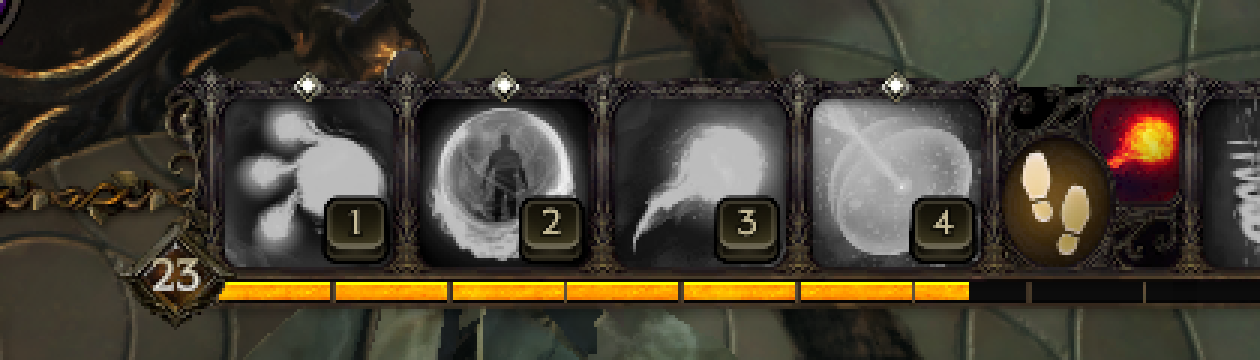
In Last Epoch my build uses five skills. Four sit on 1, 2, 3, 4 and the fifth on the right button. Each one comes back in a second or two, so the cycle never stops.
Ten minutes of play is more than a thousand presses. An hour passes seven thousand. Add the left button held down the whole time so the character runs.
That is what a macro is for: repeat the keys on the interval I choose, hold the movement button, and recast the buff before it drops. I do not want to press 1, 2, 3, 4 by hand for an hour or watch the spell timer. The Num Lock trick holds one key. I need five.
I have played Diablo since the first one. By the end of the night my arm was tired, and I need it for work. Starting the next day with it worn out from clicking did not add up.
I was not going to stop playing. I was going to stop clicking.
The Logitech software
The program that came with the mouse, Logitech’s, recorded a sequence and replayed it from a side button. I made one that pressed the left button every two seconds. The character walked on its own and I watched.
It worked until the game opened a window in the wrong place. Then the macro clicked the inventory, the chat, whatever was in front. The program did what it promised. The work was mine: program the sequence by hand for each game, then reprogram it every time the screen moved.
I wanted something specific, something that already knew what to do in that game.
The little black window
For Diablo III someone had already made a spammer. For Diablo IV there was D4Turbo: a dark window with a table of key, action and milliseconds. F2 starts, F3 stops, F9 quits. You pick the key and the interval. No clicks to record.
I downloaded it, installed it and used it that night. On the second night I started looking at the window with suspicion. How did it talk to the game?
What was inside
I installed REA (reverse-engineer-anything), a skill that reads an executable and answers questions: which libraries it loads, which Windows functions it calls, which strings were left in the binary.
I ran it on D4Turbo. In one session, the program stopped being a black box.
The only thing it uses to talk to the game is SendInput, a Windows function any program can call to pretend someone pressed a key. D4Turbo calls that function on a timer. The rest of the program is interface.
No driver, no code injection. It does not read the game’s memory and does not look at the screen. It presses on the clock and hopes the buff dropped on time.
I had treated that as magic for years. It was a function Microsoft has documented forever.
The ask
Last Epoch had no D4Turbo, and I was not going to wait for someone to make one.
I asked the agent: take what you learned about D4Turbo and do the same for Last Epoch, in Rust.
I wanted Rust because D4Turbo is Rust and because I wanted to learn. I had never written a line. It was laziness, and the list of things to learn was longer than the will to start. On my own, I would have quit at the first compiler error.
13.6%
Before writing the app, the agent wrote a throwaway Python script. The script pressed 1 inside the game and compared the skill bar pixels before and after. The bar changed 13.6%. With no input, it changed 0.00%.
That was enough to continue.
The app shipped the same day. Version 0.1.0 went to GitHub with an installer and a portable executable. I installed it, opened the game and pressed F2.
It worked. I spent the rest of the night playing with a program that did not exist that morning.
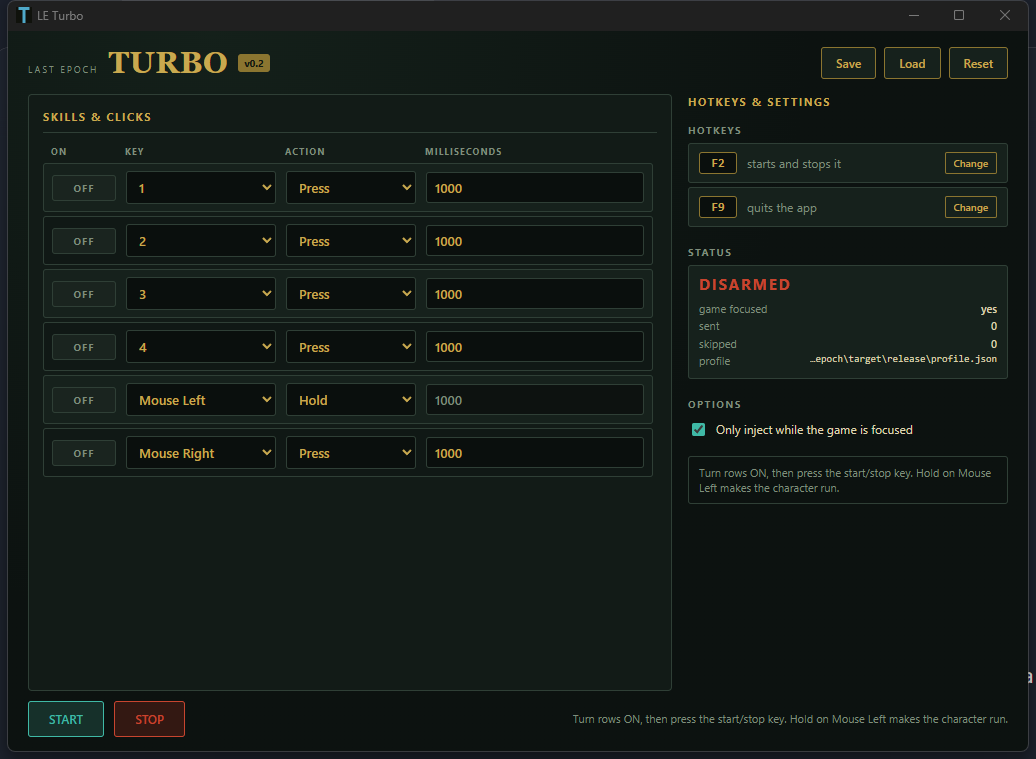
The code is at github.com/farukzahra/last-epoch.
Comments
Comments powered by GitHub — sign in to join the discussion.